Thesis Kasay-Kasay: The Art of Bioindicators in Changing Waters
Environmental truths become unstoppable when design translates science into stories that demand attention and care.
00

problem
Environmental degradation in Batangas continues to worsen, particularly in aquatic ecosystems such as the Verde Island Passage and the Pansipit River. While scientific information about anthropogenic pollution, biodiversity loss, and water quality exists, it often remains inaccessible to young people and local communities. Data alone does not create understanding, and understanding does not happen without intention. As a result, the declining population of bioindicator species, especially the Northern Indigo-banded Kingfisher, is rarely recognized as a warning sign of deeper ecological imbalance that directly affects human health and livelihood. The real problem was not the absence of information, but the failure of communication. Important truths were available, yet they were not being translated into stories people could see themselves in.
solution
Kasay-Kasay reframes environmental advocacy through multimedia communication rather than scientific measurement. The project synthesizes credible books, academic articles, and trusted online sources into visual narratives designed specifically for youth and young professionals in Batangas. By centering the Kingfisher as a bioindicator, the study transforms environmental decline from an abstract issue into a recognizable symbol of urgency and responsibility. Design in this project functions as a bridge. It connects science to culture, data to emotion, and awareness to action. Instead of overwhelming audiences with statistics, Kasay-Kasay invites them to notice what is disappearing and why it matters.
Kasay-Kasay was built on the belief that change does not begin with noise, but with clarity. As Multimedia Arts students, we acknowledged our limitations in scientific data collection and embraced our responsibility as communicators. This project became an act of translation. It exists to make environmental truths visible, local, and impossible to ignore.
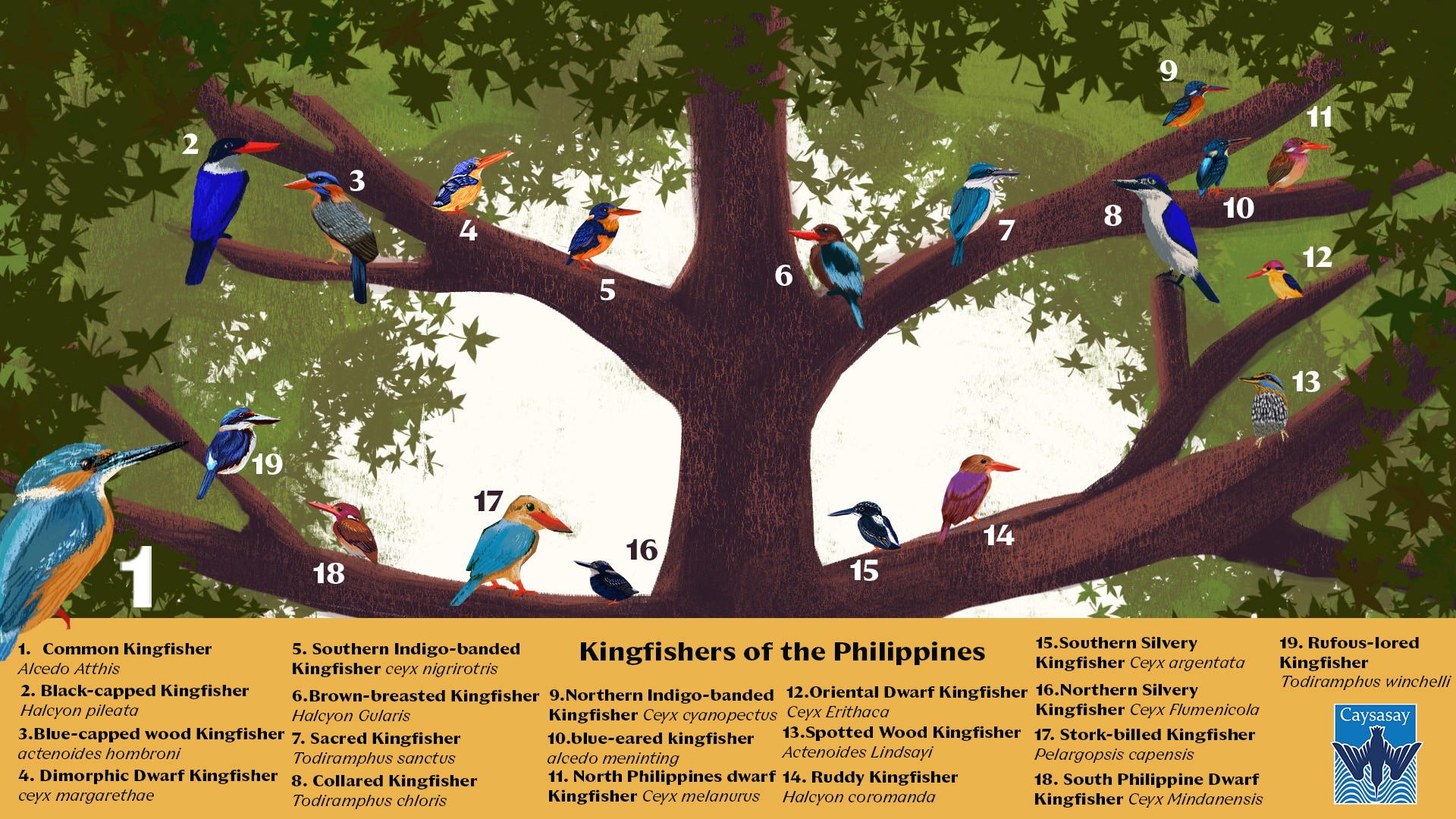
The work speaks to Batangenos not as spectators, but as stakeholders. It reminds the youth that awareness is not passive, and that creativity, when used with purpose, can become a form of care for the places we call home.
01

02

03

see also


